Dark Spots on Face — What They Are and Why They Happen
Dark spots are areas of the skin that appear darker than the surrounding area due to increased pigment. They are extremely common and can happen to anyone, regardless of age or skin type.
Most people refer to them casually as:
- “Dark spots”
- “Marks”
- “Patches”
- “Uneven skin tone”
- “Post-acne dark marks”
While these terms sound different, they often refer to the same thing:
areas of skin where pigment has collected more in one spot than the rest of the face.
Causes of Dark Spots on Face (USA & Europe Analysis)
Based on SERP results, People Also Ask, and skincare community discussions, the most common reasons include:
1. Sun Exposure (Most Common in USA & Europe)
Sunlight is one of the top contributors to dark spots. People living in sunny US states (California, Florida, Texas, Arizona) and European countries (Spain, Italy, Greece, Portugal) discuss this frequently on Reddit and Quora.
Even short daily exposure — walking, driving, school commute — can lead to spots over time.
2. Previous Breakouts
After a pimple heals, a dark mark often remains. This is the most common cause of dark spots in teens and young adults.
Many USA/UK users search for:
“why do my pimples leave dark marks?”
3. Hormonal Fluctuations
Natural hormonal changes may influence pigment appearance. This is often discussed in women’s skincare groups and European beauty forums.
4. Rubbing or Scratching Skin
Friction from masks (common in colder regions), harsh scrubs, or picking at spots can contribute to dark marks.
5. Heat Exposure
This includes cooking, sitting near heaters, saunas, and hot showers — common triggers for sudden darkening discussed on Reddit.
6. UV Reflection from Snow
People in Canada, Norway, Finland, and the northern US often develop winter dark spots due to UV bouncing off snow.
7. Lifestyle Factors People Don’t Realize
Many USA/European users mention these:
- Lack of proper routine
- Not moisturizing enough
- Sleeping late
- Using random products inconsistently
- Touching the face frequently
- Not reapplying sunscreen
These are small habits, but they build up to visible spots.
Why Do Dark Spots Appear on Face Suddenly?
(Long-tail keyword)
Sudden dark spots usually appear due to one or more quick triggers:
- Spending time outdoors unexpectedly
- A recent breakout healing
- Hot showers
- Rubbing or scratching
- Using overly strong exfoliators
- Wearing sunscreen only occasionally
- Heat from cooking or steam
- Long drives with sunlight through the window
In most cases, sudden spots are related to recent irritation or recent sun exposure, even if it was just for a few minutes.
Home Remedies for Dark Spots (Safe & AdSense-Friendly)
Many people in USA & Europe prefer natural ingredients. Here are gentle, commonly used at-home options.
1. Aloe Vera Gel
A popular soothing ingredient that helps hydrate and support skin comfort.
2. Honey
Honey can help maintain moisture and softness.
3. Oat Paste
Oats are frequently used for calming the skin and improving texture.
4. Potato Juice (Traditional Remedy)
Some people across different cultures use potato juice for a lighter-looking appearance over time.
5. Green Tea Compress
Green tea is often used for soothing irritated skin.
6. Lemon Disclaimer (Important)
Many search “lemon for dark spots,” but it may irritate skin.
It’s safer to avoid applying lemon directly.
Best Home Ingredients for Hyperpigmentation
Based on natural skincare communities, the most commonly used ingredients include:
- Aloe vera
- Turmeric (mixed with yogurt or honey)
- Oatmeal
- Potato juice
- Licorice extract
- Green tea
- Rose water
- Cucumber juice
These are widely used in at-home routines across the USA, UK, Germany, India, Canada, etc.
Daily Skincare Routine for Dark Spots & Uneven Skin Tone
This routine is safe, gentle, and suitable for winter, summer, humid, and dry climates.
Morning Routine
Step 1: Gentle Cleanser
Choose a mild, hydrating cleanser.
Step 2: Hydrating Toner (Optional)
Helps keep the skin balanced.
Step 3: Lightweight Hydration Serum
Look for simple, gentle formulas like glycerin or niacinamide-based products.
Step 4: Moisturizer
Cream or gel depending on climate.
Step 5: Sunscreen (Most Important)
Daily sunscreen helps reduce dark spots from deepening due to sunlight.
Night Routine
Step 1: Gentle Cleanse
Removes oil, pollution, and dirt.
Step 2: Hydrating Layers
Optional toner + serum.
Step 3: Nourishing Moisturizer
Helps support the skin barrier.
Step 4: Optional Facial Oil
Helps lock in moisture.
How Long Does It Take for Dark Spots to Fade Naturally?
(Sub keyword: treatment time)
(Long-tail keyword: how long does it take for dark spots to fade naturally)
Based on general skincare guidance:
- Mild dark spots: 3–8 weeks
- Moderate spots: 2–4 months
- Deep, long-standing spots: Several months
The fading time depends on:
- How long the dark spot has been there
- Sun exposure level
- Daily routine consistency
- Skin type
- Seasonal changes
Natural fading happens slowly — consistency matters more than products.
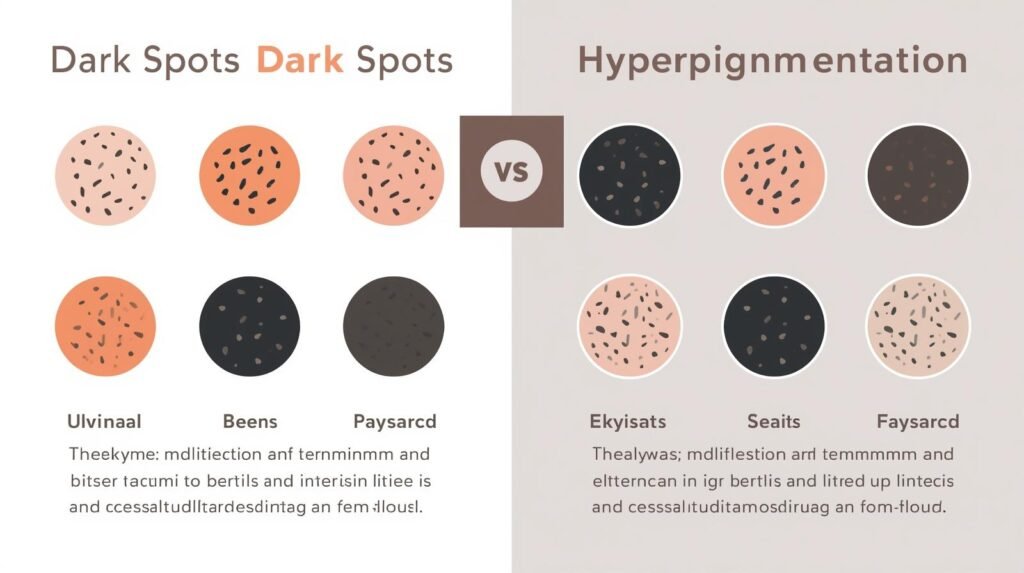
Dark Spots vs Hyperpigmentation — Difference Explained
Many people mix these terms, but they’re not exactly the same.
Dark Spots
Simple areas of the face darker than surrounding skin.
Hyperpigmentation
A broader term describing any increase in pigment.
Easy Explanation:
All dark spots are hyperpigmentation, but not all hyperpigmentation is a “spot.”
Hyperpigmentation may include:
- Large patches
- Post-acne marks
- Sun darkening
- Melasma patches
able — Common Triggers & Gentle Care Tips
| Trigger | Why It Happens | Gentle Care Tips |
|---|---|---|
| Sun Exposure | UV affects skin tone | Use daily sunscreen |
| Breakouts | Skin healing process | Avoid picking |
| Heat | Cooking, showers | Reduce heat exposure |
| Rubbing | Friction | Use soft towels |
| Dryness | Winter winds | Moisturize daily |
Pros & Cons of Natural Dark Spot Care
Pros
- Gentle on skin
- Budget-friendly
- Easy to find ingredients
- No strong chemicals
- Beginner-friendly
Cons
- Slow results
- Needs consistency
- Not suitable for every skin type
- Patch test always recommended
Real Examples (USA & Europe)
Example 1 — Florida, USA
Sun-heavy climates often show dark spots around cheeks, forehead, and nose.
Example 2 — London, UK
Stress, pollution, and cloudy weather contribute to uneven tone.
Example 3 — Norway/Finland
Snow reflection and cold winds affect skin tone.
Example 4 — Germany/France
Indoor heating + outdoor cold contrast can deepen marks.
Conclusion
Dark spots on the face are extremely common, manageable, and often improve with a gentle, consistent routine. Understanding your triggers, protecting your skin from sun and heat, and using natural at-home care can help promote a more balanced-looking skin tone over time.
With patience, consistent habits, and the right routine, anyone can work toward clearer, more even-looking skin.
FAQs
1. What causes dark spots on the face?
Dark spots can appear due to past breakouts, sun exposure, friction, heat, or natural skin tone changes. Daily habits and environmental factors often play a big role.
2. Why do dark spots appear on the face suddenly?
Sudden dark spots usually come from recent sun exposure, heat from cooking or showers, or a breakout healing. Even a few minutes of sunlight can deepen spots.
3. Do dark spots fade naturally?
Yes, many dark spots gradually fade with time, especially when protected from the sun and cared for with a simple, consistent routine.
4. How long does it take for dark spots to fade naturally?
Mild spots may soften in 3–8 weeks, while older or deeper spots may take several months. Consistent care usually supports better results.
5. What home remedies can help dark spots?
Aloe vera gel, honey, green tea compresses, oat masks, turmeric mixtures, and potato juice are common natural remedies used for dark marks.
6. How do I remove dark spots naturally at home?
Gentle routines like moisturizing daily, using natural ingredients such as aloe or oats, staying consistent, and protecting skin from sunlight can help support fading over time.
7. What is the best natural ingredient for dark spots?
Aloe vera, turmeric paste, green tea, and licorice extract are commonly used for uneven skin tone and dark marks in natural skincare.
8. What is the difference between dark spots and hyperpigmentation?
Dark spots are small areas that look darker than surrounding skin. Hyperpigmentation is a broader term that includes patches, marks, or uneven tone anywhere on the face.
9. Can dark spots be treated without chemicals?
Yes, many people prefer using natural ingredients and gentle routines. Consistency with simple steps often supports a more even skin appearance.
10. Does sun exposure make dark spots worse?
Yes. Sunlight is one of the biggest contributors to dark spots becoming deeper. Daily sunscreen use helps prevent further darkening.
11. Can hot showers cause dark spots?
Hot showers may not directly cause dark spots, but the heat can make existing marks appear darker or more noticeable.
12. What skincare routine helps reduce dark spots?
A gentle routine usually works best: mild cleanser → hydrating toner or serum → moisturizer → sunscreen in the morning. At night, add hydration layers and lock in moisture.
13. How can I prevent dark spots from getting darker?
Avoid direct sunlight, use sunscreen daily, stay away from harsh scrubs, and keep your skin moisturized to support comfort and even tone.
14. Are dark spots permanent?
Most dark spots fade gradually with consistent care and sun protection. Older spots may take longer to lighten naturally.
15. Do dark spots get worse in summer?
Yes, they can. Even short moments in the sun may darken marks. Sun reflection from sand, water, or pavement can intensify their appearance.
16. Can dark spots appear in winter too?
Yes. Snow reflects UV rays, and indoor heating can make the skin more sensitive, causing spots to look more visible.
17. Do dark spots mean something is wrong?
In most cases, dark spots form due to normal lifestyle factors like sun exposure or past breakouts. They are very common and usually harmless.
18. Should I exfoliate dark spots?
Gentle exfoliation can help improve skin texture, but over-exfoliating may cause irritation and make spots look darker.
19. Can picking pimples cause dark spots?
Yes. Touching or squeezing pimples is one of the most common reasons dark marks remain after the breakout heals.
20. What is the easiest way to avoid dark spots?
Protect your face from sunlight, avoid picking at skin, maintain a simple daily routine, and stay consistent with hydration and gentle care.