How Do Japanese Wash Their Face? The Core Philosophy
Japanese face-washing is built on a simple principle:
Cleanse the skin gently, remove dirt thoroughly, and protect the skin barrier at all costs.
Unlike some Western routines that focus on exfoliation or heavy foaming products, J-beauty cleansing focuses on:
- Soft textures
- Minimal friction
- Balanced pH
- Consistent habits over trending hacks
- Respecting the skin’s natural moisture
Japanese people treat their face the way they treat delicate silk—carefully, slowly, and with attention.
What Makes Japanese Face-Washing Unique?
Here’s what sets it apart from common Western routines:
1. The “Zero Friction” Rule
Across forums and Japanese beauty interviews, one message is consistent:
“Never rub the face harshly.”
This means:
- No aggressive scrubbing
- No pulling the skin
- No rough towels
- No applying products directly on dry skin
Japanese skincare encourages foam, softness, and glide, not pressure.
2 Double Cleansing is Normal (Oil + Foam)
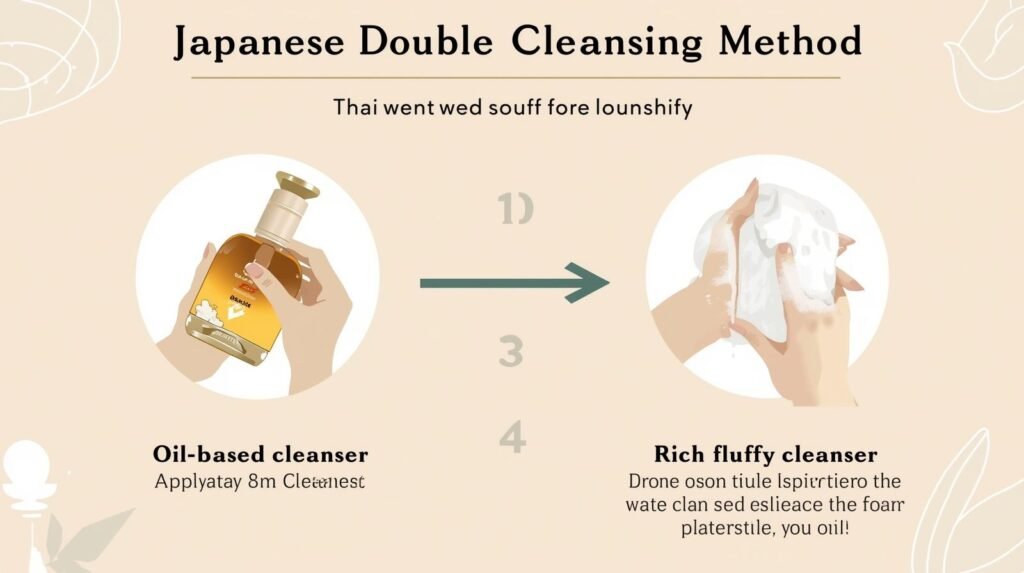
Many Japanese adults use the classic two-step cleansing method:
- Oil cleanser – removes sunscreen, makeup, pollution
- Foam cleanser – cleans the skin without stripping moisture
This routine became popular due to Japan’s humid climate and heavy sunscreen use.
3. Foam Is Everything
Japanese cleansers are not applied directly to the face.
Instead, they are whipped into a soft, airy foam—sometimes using a foaming net.
This foam reduces friction and helps the cleanser spread evenly.
4. Lukewarm Water (Never Hot)
Japanese people avoid hot water because it may dry the skin.
Instead, they use:
- Cool water in summer
- Lukewarm water in winter
5. Short, Gentle Pressure with Fingertips
No intense circular scrubbing.
Just light fingertip motions.
6. Moisturizing Immediately After
Japan follows a “clean → hydrate fast” rule.
Skin is patted dry gently and moisturized within 10–20 seconds.
Step-by-Step: How Do Japanese Wash Their Face?
Below is the complete Japanese cleansing method inspired by daily routines in Japan.
Step 1 — Start with Clean Hands
Before touching the face, Japanese people wash their hands to avoid transferring dirt or bacteria.
Why it matters:
Cleaner hands = cleaner skin.
Step 2 — Use an Oil Cleanser (Optional but Common)
Oil cleansing is very popular in Japan because most people apply sunscreen daily.
How it’s done:
- Apply oil cleanser to dry hands.
- Spread gently on dry skin using soft motions.
- Focus on areas where sunscreen collects:
- Nose
- Cheeks
- Forehead
- Around the mouth
- Emulsify with a little water (the cleanser turns milky).
- Rinse with lukewarm water.
Why Japanese people love it:
- Removes sunscreen easily
- Breaks down makeup
- Prevents clogged pores
- No harsh rubbing needed
Step 3 — The Foaming Cleanser (Most Important Step)
This is the signature step.
How they prepare the foam:
- Wet hands.
- Squeeze a pea-sized amount of cleanser.
- Rub palms together with water.
- Whip until it becomes a big, soft, marshmallow-like foam.
- Keep adding water until it is fluffy and airy.
In Japan, many people use a foaming net to create this foam quickly.
How they apply the foam:
- Spread the foam onto the face—the foam does the cleaning, not your fingers.
- Use gentle circular movements with fingertips.
- Avoid pressing the skin.
- Clean for 30–45 seconds.
- Rinse thoroughly with lukewarm water.
Step 4 — Pat Dry with a Soft Towel
Japanese people avoid rubbing the face dry.
Instead:
- They use a clean, soft towel.
- They gently dab off water.
No dragging, no pulling.
Step 5 — Immediate Hydration
After cleansing, skin is hydrated within seconds using:
- Toner (“Lotion”)
- Essence
- Emulsion
- Moisturizer
This helps keep the skin balanced after washing.
Japanese Face-Washing Tools & Products
1. Foaming Nets (泡立てネット)
These nets help create cloud-like foam quickly.
2. Soft Microfiber Towels
Used to gently pat the skin dry.
3. Oil Cleansers
Common Japanese brands:
- DHC Deep Cleansing Oil
- Shu Uemura Oil
- Muji Mild Oil Cleanser
4. Foam Cleansers
Popular choices:
- Hada Labo
- Senka Perfect Whip
- Shiseido
Why Do Japanese People Wash Their Face This Way?
Cultural Reasons
- Japanese beauty prioritizes preservation over repair.
- Skincare is a form of self-care.
- Minimalism and routine are important values.
Climate Reasons
Japan has:
- Humid summers
- Dry winters
- Frequent pollution in cities
This influences gentle cleansing habits.
Dermatology Trends in Japan
Skin barrier protection is emphasized strongly.
Japanese cleansing focuses on:
- Low irritation
- Balanced skin
- Long-term maintenance
Western vs Japanese Face-Washing: A Comparison
| Feature | Western Routines | Japanese Routines |
|---|---|---|
| Cleansing Type | Foaming, exfoliating | Double cleansing, gentle foam |
| Texture | Cream, gel | Airy foam |
| Pressure | Often medium | Very light |
| Tools | Brushes, scrubs | Foaming nets, hands only |
| Goal | Deep cleaning | Balanced cleaning |
Pros & Cons of the Japanese Face-Washing Method
Pros
- Very gentle
- Reduces friction
- Feels luxurious
- Good for makeup wearers
- Easy to maintain
- Suitable for humid climates
Cons
- Foam preparation takes time
- Not everyone prefers two cleansers
- May require specific tools (foaming net)
- Some products may not be easily available worldwide
Real-Life Examples from Japanese Daily Routines
Example 1: Office Workers in Tokyo
Most office workers apply sunscreen daily. They double-cleanse at night to remove buildup.
Example 2: Students
Many students use simple foaming cleansers and avoid harsh scrubs.
Example 3: Older Adults
Older adults tend to choose low-foam cleansers to avoid dryness.
How You Can Apply the Japanese Method at Home
Here’s a simple routine inspired by J-beauty:
- Remove sunscreen/makeup with oil cleanser.
- Create foam using a small amount of cleanser.
- Apply foam gently.
- Rinse with lukewarm water.
- Pat dry softly.
- Hydrate quickly.
Use products that fit your skin type and comfort level.
Conclusion
Japanese face-washing is not about fancy products—it’s about gentle habits, consistency, and respecting the skin. Their cleansing ritual focuses on foam, softness, low friction, and proper hydration.
Whether you live in the USA, UK, or Europe, you can adapt this routine to your lifestyle without needing to follow it perfectly. The key is to be gentle and consistent.
FAQs
1. Do Japanese people double-cleanse every day?
Many do it at night, especially if they wear sunscreen or makeup.
2. What cleanser do Japanese people use in the morning?
Usually a mild foaming cleanser or sometimes just water.
3. Do Japanese people use exfoliators daily?
No, exfoliating is often done less frequently to avoid irritation.
4. Do they use makeup remover wipes?
Rarely. Oil cleansing is preferred.
5. Why is foaming important in Japanese skincare?
It reduces friction on the skin.
6. What water temperature do they use?
Lukewarm water.
7. Is the Japanese method good for sensitive skin?
It’s generally gentle, but choose products based on your personal comfort.
8. Do Japanese men also follow this routine?
Yes, many men use similar cleansing habits.
9. How long does Japanese face-washing take?
Around 2–3 minutes.
10. Is double cleansing necessary?
It depends on your lifestyle and product use.
11. Do Japanese people use toner after washing?
Yes, toner (“lotion”) is a key step.
12. Do they rub the face with towels?
No, they pat gently.
13. Are Japanese cleansers heavily fragranced?
Most are lightly scented or fragrance-free.
14. Is the Japanese method expensive?
Not necessarily; many affordable options are available.
15. Do Japanese people use face brushes?
Mostly no; they prefer hands.
16. What is the most popular Japanese cleanser?
Foaming cleansers like Senka Perfect Whip are very common.
17. Do they wash their face in the shower?
Some do, but many prefer washing at the sink.
18. Do they use micellar water?
It’s used, but not as common as oil cleansers.
19. Do teenagers in Japan follow multi-step routines?
Most keep their routine simple.
20. Is the Japanese method suitable for dry climates?
Yes, as long as moisturization is consistent.